
Back pain is one of those things almost everyone experiences — and almost everyone manages badly. Most people reach for a painkiller, feel better for a few days, and then find the pain creeping back. Ayurveda takes a fundamentally different approach. Rather than suppressing the symptom, it works to understand why the pain exists and correct the underlying imbalance. For people across Karnataka dealing with chronic or recurring back pain, Ayurvedic treatment has become a serious, evidence-informed option — not just a last resort.

Back pain affects up to 80% of people at some point in their lives (World Health Organization, 2023). Ayurvedic treatments — particularly Kati Basti, Abhyanga, and structured Panchakarma programs — address the root causes of back pain rather than just masking symptoms. Clinics like Chithrakoota Ayurveda in Kundapur, Karnataka, offer physician-led, personalized programs on a dedicated wellness campus with an in-house pharmacy.
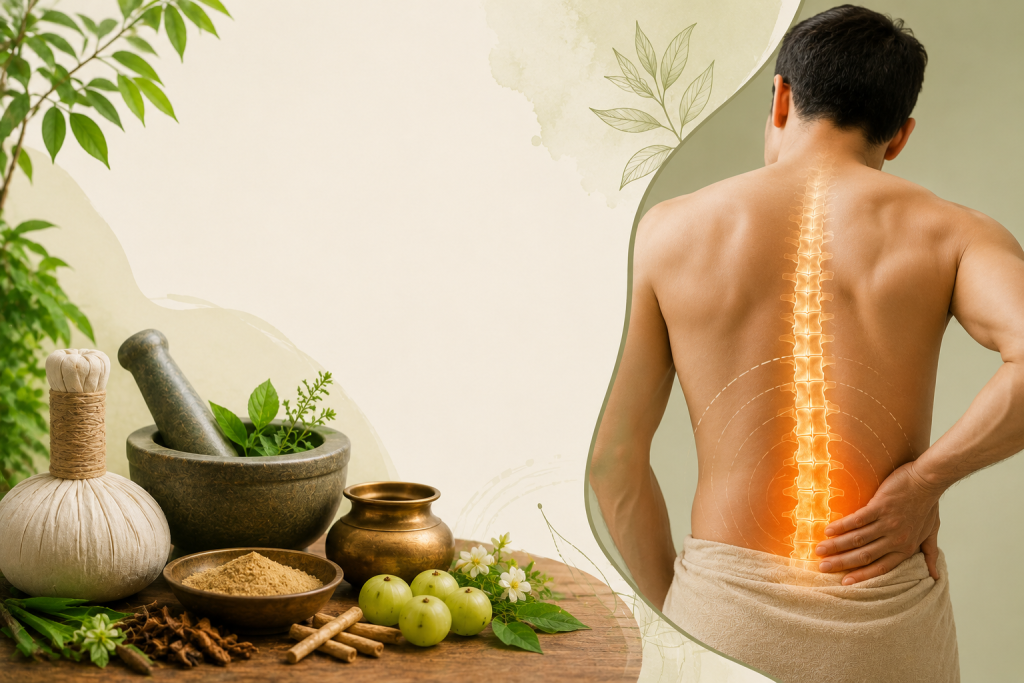
What Does Ayurveda Say About Back Pain?
Back pain affects up to 80% of adults at some point in their lives (World Health Organization, 2023). In Ayurveda, the condition is primarily understood as an aggravation of Vata dosha — the energy governing movement, dryness, and the nervous system. When Vata accumulates in the lower back region (called Kati in Sanskrit), it causes stiffness, pain, and impaired mobility. This framing explains why Ayurvedic treatments focus on warmth, oleation, and deep nourishment rather than ice packs and anti-inflammatories.
The lower back region corresponds to the Kati marma point — a vital energy junction in Ayurvedic anatomy. Treatments aimed at this area are designed to restore Vata balance, improve circulation to the intervertebral discs, and calm the nervous pathways that carry pain signals. This is not folk medicine; it's a systematic framework developed over 5,000 years and increasingly studied in clinical settings.
What Are the Common Causes of Back Pain From an Ayurvedic Perspective?
Ayurveda identifies several root causes for back pain — most of which map closely onto what modern medicine also recognizes as risk factors.
Vata Aggravation and Lifestyle Patterns
Sitting for long hours, eating cold or dry foods, irregular sleep, excessive stress, and physical overexertion all aggravate Vata. When Vata accumulates in the spine, it depletes the natural lubrication between vertebrae and weakens the supporting muscles. This is the Ayurvedic explanation for why desk workers and people under chronic stress so often develop persistent lower back problems.
Ama Accumulation
*Ama* — undigested metabolic waste — can settle in the joints and tissues when digestion is weak. In the spine, ama buildup contributes to inflammation, stiffness, and conditions like spondylitis. Ayurvedic treatment for back pain almost always begins with detoxification protocols to clear ama before strengthening therapies begin.
Structural Conditions Through an Ayurvedic Lens
Conditions like slip disc (herniated nucleus pulposus), sciatica, and lumbar spondylosis are recognized in Ayurveda under the term *Gridhrasi* (for sciatica) and related categories. These are understood as advanced Vata disorders, often with a secondary involvement of *Kapha* dosha creating compression and inflammation. Treatment protocols differ depending on the specific pattern, which is why a proper Ayurvedic consultation always precedes therapy.
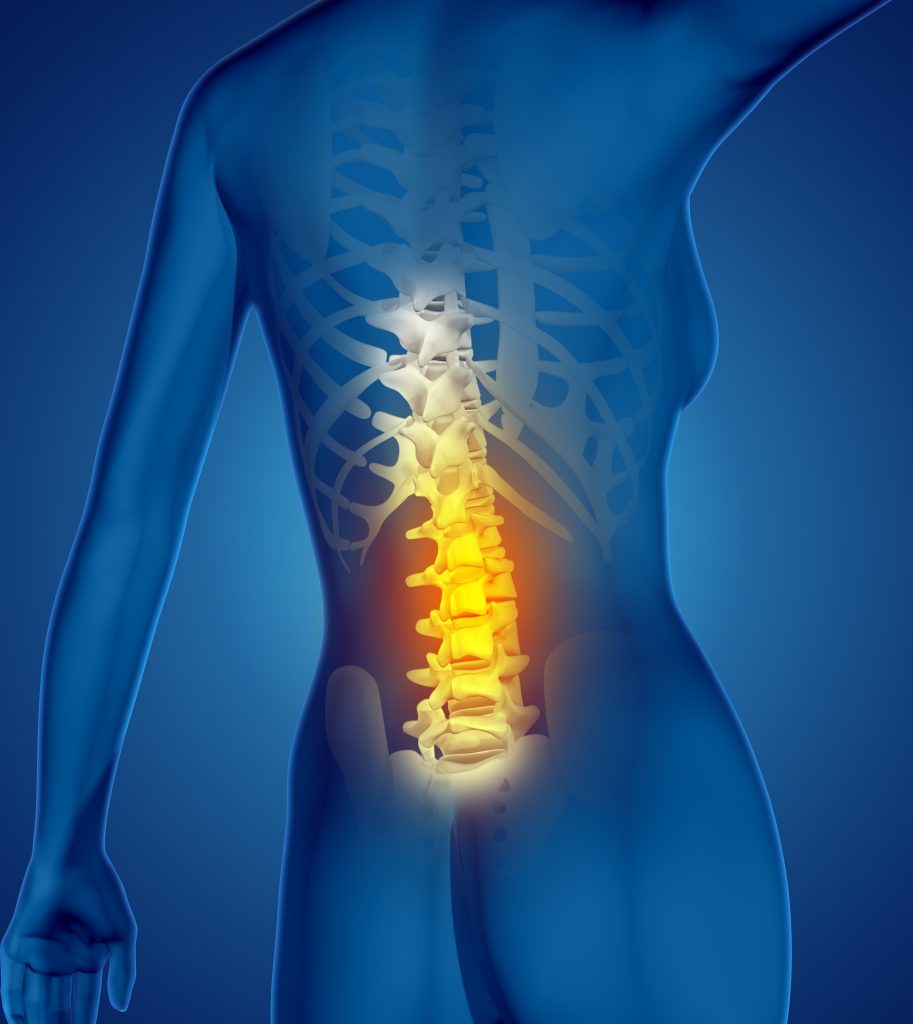
What Ayurvedic Treatments Work for Back Pain?
Clinical Ayurveda uses several targeted therapies for back pain, often combined in a structured program for best results.

Kati Basti
Kati Basti is one of the most recognized Ayurvedic treatments for lower back pain. A dam made of black gram dough is formed around the lower back and filled with warm medicated oil — typically sesame oil infused with herbs like *Bala*, *Ashwagandha*, or *Dhanwantaram*. The oil is held for 30 to 45 minutes, allowing deep penetration into the muscles, ligaments, and vertebral joints. It relieves stiffness, reduces nerve compression, and nourishes the intervertebral discs. Most protocols recommend 7 to 14 consecutive sessions.

Abhyanga
Abhyanga is a full-body synchronized oil massage performed by trained therapists using warm herbal oils. For back pain, specific strokes along the spine help release muscle tension, improve lymphatic drainage, and calm an overactive nervous system. It's rarely used in isolation — it typically precedes steam therapy or more targeted treatments like Kati Basti.

Herbal Medicines
Internal herbal formulations play a central role alongside external therapies. Classical preparations like *Yogaraj Guggulu*, *Rasnasaptaka Kwatha*, and *Maharasnadi Kwatha* are commonly prescribed for Vata-related back conditions. These work systemically to reduce inflammation, support nerve health, and improve tissue nourishment. Personalized medicine — where a physician customizes the formulation to the individual's constitution and condition — consistently delivers better results than off-the-shelf supplements.
Panchakarma
Panchakarma is Ayurveda's deep detoxification system. For chronic back pain, a Panchakarma program typically runs 7 to 21 days and includes preparatory oleation (snehana), sudation (swedana), and targeted purification procedures. For back and spine conditions, *Basti* (medicated enema) is particularly relevant — it's considered the most effective Panchakarma therapy for Vata disorders and has a direct therapeutic effect on the lumbar region. A well-designed Panchakarma program can provide lasting relief from conditions like spondylitis, sciatica, and chronic disc problems.
Why Choose Chithrakoota Ayurveda for Back Pain Treatment in Karnataka?
Among Ayurvedic centers for back pain in Karnataka, Chithrakoota Ayurveda in Kundapur stands apart on several practical grounds — not because of marketing, but because of what the facility actually offers.
01
A Living Healing Environment
The center sits on an 18-acre campus in Aloor, Kundapur — surrounded by more than 150 medicinal plants. This isn't decorative landscaping. Many of the herbs used in your treatment are grown and harvested on the property, which directly affects the potency and freshness of the oils and medicines prepared there. Fresh *Bala*, *Dashamula*, and *Shankhpushpi* processed in-house carry a different therapeutic quality than dried bulk imports.
02
In-House Pharmacy With Personalized Medicines
Chithrakoota runs its own pharmacy, which means the physician who diagnoses you also oversees the medicines prepared for you. Personalized formulations — adjusted for your constitution, the severity of your back condition, and your digestive capacity — are a genuine clinical advantage. This is not something most commercial Ayurvedic centers can offer.
03
Desi Cow Farm for Authentic Treatment Ingredients
The center maintains a desi cow farm on the property, producing authentic ghee and milk used in treatments. In classical Ayurveda, the quality of *Go-ghrita* (cow ghee) significantly influences the efficacy of internal oleation and certain Panchakarma procedures. Commercially sourced ghee — even good-quality ghee — doesn't carry the same therapeutic gradations as ghee prepared from the milk of traditionally reared desi cows.
04
Physician-Led Care Throughout
Every treatment at Chithrakoota is overseen by qualified Ayurvedic physicians. This matters especially for back pain, where the correct therapy selection depends on accurate dosha assessment and an understanding of structural versus functional causes. A therapist-only model can deliver relaxation; physician-led care delivers clinical outcomes.
05
Structured Programs Suited for Lasting Relief
For back pain patients, the center offers 7 to 21 day Panchakarma programs — long enough to complete the full therapeutic arc of preparation, detoxification, and strengthening. International patients are also welcomed, with appropriate support for travel and extended stays.
06
Daily Yoga, Meditation, and a Solar-Powered Campus
The daily yoga and meditation sessions integrated into the program are not optional extras — they're part of the therapeutic protocol for back pain. Core strengthening, breath work, and nervous system regulation all contribute directly to recovery and relapse prevention. The solar-powered campus reflects a broader commitment to a clean, restorative environment.
Ready to Treat Back Pain Naturally?
Discover holistic Ayurvedic therapies designed to relieve chronic back pain at its root and support long-term healing.
Location: Aloor, Kundapur TQ, Udupi District, Karnataka — PIN 576233
Call: +91-9480011578 | +91-8762220168
Frequently Asked Questions
How long does Ayurvedic treatment for back pain take to show results?
Many patients notice meaningful improvement in stiffness and pain levels within 5 to 7 days of starting daily Kati Basti or Abhyanga. Chronic conditions — including slip disc, sciatica, and spondylitis — typically require a full 14 to 21 day Panchakarma program for lasting results. Milder, recent-onset back pain often responds faster. A physician assessment at the outset will give you a realistic timeline for your specific situation.
Is Ayurvedic treatment safe for slip disc and sciatica?
Yes, when conducted under qualified physician supervision. Ayurvedic treatments for disc and nerve-related back pain — particularly Kati Basti and Basti (medicated enema) — are gentle and non-invasive. They work to reduce nerve compression, restore disc hydration, and calm the inflammatory response without the risks associated with surgery or long-term painkiller use. Always disclose your full medical history and any imaging reports to the treating physician before beginning therapy.
Can I combine Ayurvedic treatment with my current medications?
In most cases, yes — but this requires open communication with both your Ayurvedic physician and your allopathic doctor. Ayurvedic herbal formulations are generally compatible with conventional medications, though certain combinations warrant monitoring. At Chithrakoota, the physician reviews your existing medications during the initial consultation and advises accordingly.
Is Chithrakoota Ayurveda suitable for international patients?
A typical program begins with two to three days of preparatory internal oleation (taking medicated ghee) and gentle massage to mobilize ama. The main treatment phase includes daily therapies such as Kati Basti, Abhyanga, Swedana (steam therapy), and Basti. Meals during the program are light, warm, and easily digestible — designed to support the detoxification process. Most patients feel a temporary increase in fatigue in the first few days, followed by progressively better energy and reduced pain.
What conditions can be treated at Chitrakoota Ayurveda?
Yes. Chithrakoota Ayurveda explicitly welcomes international patients and is equipped to support extended stays. The 18-acre campus in Kundapur provides a quiet, self-contained healing environment well-suited for visitors who want to step away from daily routine for a focused treatment program. Contact the center directly to discuss accommodation, treatment duration, and travel logistics before your visit.