
Cervical pain has quietly become one of the most widespread musculoskeletal complaints of the modern era. Long hours at screens, forward-head posture, chronic stress, and sedentary routines have pushed neck pain up the list of reasons people seek medical help. Conventional approaches — painkillers, physiotherapy, cervical collars — offer real relief in the short term. But many people find the pain returning, sometimes worse, once treatment stops. Ayurveda approaches cervical pain differently. Rather than dampening the symptom, it asks what allowed the imbalance to take hold — and works to correct that.
- Ayurveda classifies cervical pain as *Greeva Gata Vata* — an aggravation of Vata dosha in the neck region.
- Key treatments include Greeva Basti, Nasyam, Abhyanga with Pinda Sweda, Panchakarma detox, and classical herbal formulations.
- Physician-led care with authentic in-house medicines consistently produces better results than standardized packages.
- Chithrakoota Ayurveda in Kundapur, Udupi District offers structured 7–21 day programs in a dedicated healing environment.

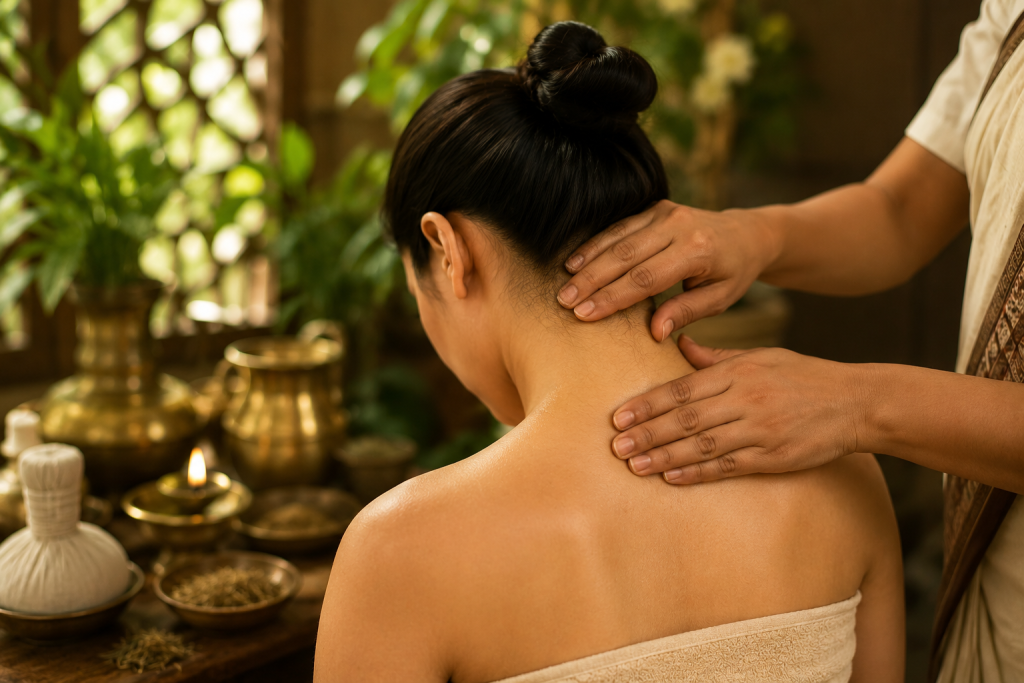
Understanding Cervical Pain in Ayurveda: What Is Greeva Gata Vata?
Cervical spondylosis — degeneration of the cervical vertebrae, discs, and surrounding tissues — is one of the most common age-related spinal conditions, estimated to affect more than 85% of people over 60 ([National Institute of Neurological Disorders and Stroke], 2023). In Ayurveda, this condition and its broader family of neck disorders are described as *Greeva Gata Vata* — the lodging of vitiated Vata dosha in the *Greeva* (neck) region.
Vata is the principle that governs movement, dryness, and the nervous system. When it becomes aggravated — through lifestyle factors, diet, or constitutional predisposition — it depletes the natural lubrication in the cervical joints, weakens the muscles and ligaments supporting the neck, and creates compression along the nerve roots that emerge from the cervical spine. The result is the familiar cluster of symptoms: stiffness, radiating pain into the shoulders and arms, tingling, headaches, and in more advanced cases, dizziness and impaired grip strength.
Understanding the Causes and Symptoms of Greeva Gata Vata
What Is Katigraha?
Ayurveda identifies causes that map closely onto what modern clinical research also recognizes. Prolonged sitting with a forward head posture is a significant aggravator of Vata — it places sustained mechanical load on the cervical discs while simultaneously triggering the nervous system stress response. Irregular sleep, cold and dry foods, emotional stress, and suppression of natural urges (holding the body in fixed positions for too long) all contribute.
*Ama* — metabolic waste that accumulates when digestion is weak — also plays a role. When ama settles in the cervical joints, it contributes to the stiffness and inflammation that characterize chronic cervical spondylosis. This is why Ayurvedic treatment for cervical pain almost always begins with some form of detoxification before strengthening therapies are introduced.
Common Causes and Triggerszz
Classical Ayurvedic texts describe Greeva Gata Vata with symptoms that align closely with the modern clinical picture:
- Stiffness and reduced range of motion in the neck
- Pricking or shooting pain radiating into the shoulders, arms, and upper back
- Tingling or numbness in the hands and fingers
- Headaches, particularly at the base of the skull
- Dizziness or vertigo in cases with upper cervical involvement
- Sleep disturbance due to pain and discomfort
Understanding which symptoms are present — and which doshas are involved — shapes the entire treatment approach.
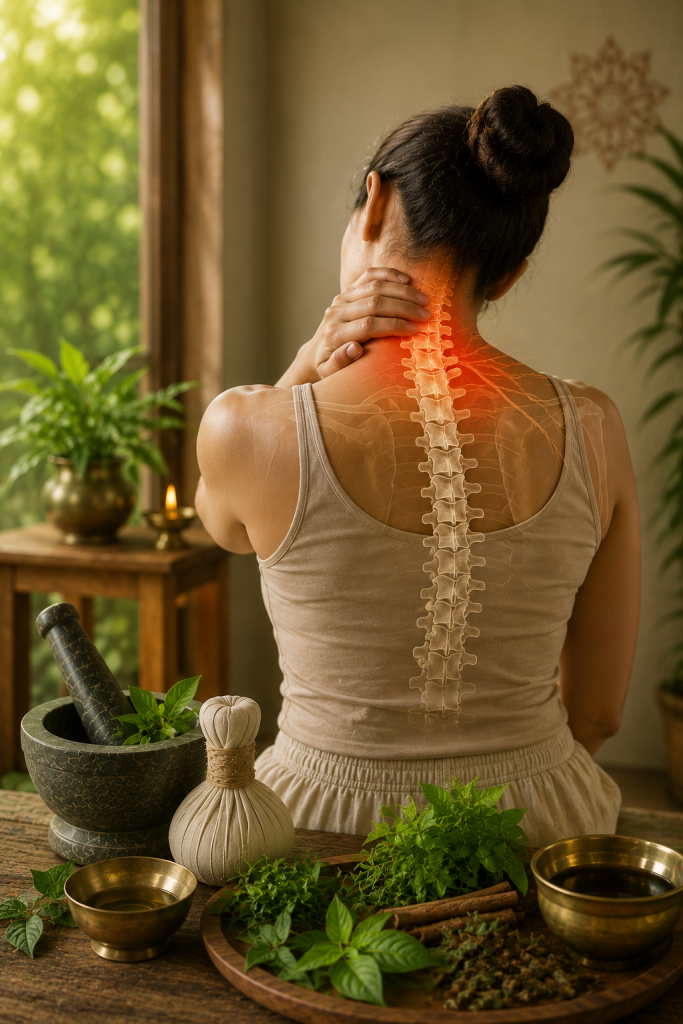
What Ayurvedic Treatments Work for Cervical Pain?
Ayurvedic treatment for cervical pain combines targeted external therapies, internal herbal medicines, and lifestyle guidance. The combination is always individualized — a physician's assessment of constitution, the nature of the condition, and the patient's overall health determines which therapies are appropriate and in what sequence. Here are the primary procedures used.

Greeva Basti
Greeva Basti is the cervical counterpart of Kati Basti for the lower back. A ring of black gram dough is formed around the neck and filled with warm medicated oil — typically Mahanarayana Taila, Ksheerabala Taila, or Dhanwantaram Taila, chosen based on the patient's constitution and the severity of the condition. The oil is held in place for 30 to 45 minutes, allowing the heat and medicinal properties to penetrate deeply into the cervical muscles, ligaments, and intervertebral spaces.
The therapy relieves stiffness, reduces nerve compression, and nourishes the depleted tissues around the cervical vertebrae. It's considered one of the most direct and effective local treatments for Greeva Gata Vata. Most protocols recommend 7 to 14 consecutive sessions as part of a structured program.

Nasyam
Nasyam — the administration of medicated oils or herbal preparations through the nasal passages — is a particularly relevant therapy for cervical conditions. In Ayurvedic anatomy, the nose is understood as the gateway to the brain and the central nervous system. Greeva disorders, especially those involving the upper cervical spine, headaches, and dizziness, respond well to Nasyam because the therapy addresses the Vata accumulated in the head, neck, and upper respiratory channels.
PERSONAL EXPERIENCE Physicians at specialist Ayurvedic centers often describe Nasyam as the therapy that makes the other treatments work better — it clears the pathways through which Vata circulates, so localized therapies like Greeva Basti have a cleaner environment to act on. Used incorrectly, it can cause discomfort. Used well, it's a precise and powerful tool.
The procedure involves lying down with the neck extended gently, instilling a specific number of drops of medicated oil or liquid into each nostril, and following a short post-procedure rest. It's typically performed daily over 7 to 14 days.
Abhyanga with Pinda Sweda
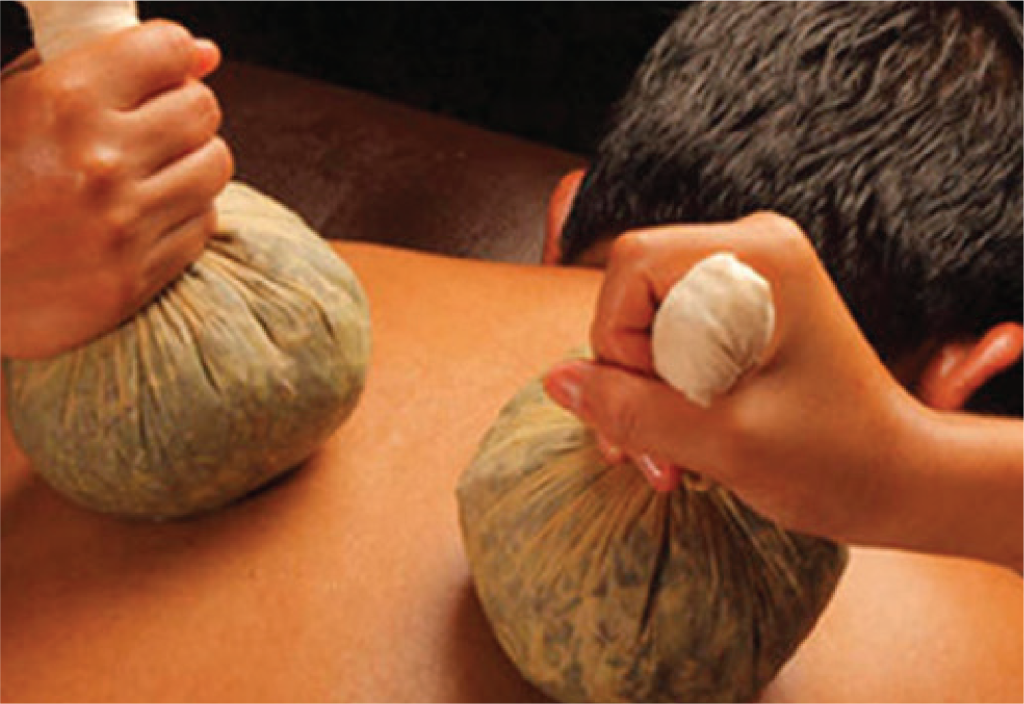
Abhyanga — synchronized full-body medicated oil massage — is the foundation of most inpatient Ayurvedic programs. For cervical pain, it's performed with warm Vata-pacifying oils using strokes that run along the spine and out to the shoulders and arms, following the nerve pathways. It releases muscle tension, improves circulation to the compressed tissues, and calms the nervous system.
Pinda Sweda follows Abhyanga in many cervical pain protocols. Heated herbal boluses — typically filled with *Njavara* rice cooked in medicated milk, or dry herbal powders depending on the presentation — are applied rhythmically to the neck and shoulders. The combination of heat, herbs, and mechanical action softens deep-seated stiffness, reduces spasm in the paraspinal muscles, and prepares the tissues for more specific therapies.

Panchakarma Detox: Basti and Virechana
For chronic or severe cervical conditions, a full Panchakarma program offers the most comprehensive therapeutic approach. Panchakarma is Ayurveda's deep detoxification system, designed to clear accumulated ama and vitiated doshas from the tissues rather than simply suppressing symptoms.
For Greeva Gata Vata, Basti — medicated enema therapy — is particularly relevant. Though it acts through the colon, Basti is the primary treatment for Vata disorders throughout the body, including the spine and nervous system. A course of Basti administered over 7 to 15 days works systemically to reduce Vata accumulation and restore the natural lubrication of all joints and nerve pathways.
Virechana (therapeutic purgation) is sometimes included when there is a significant Pitta component — often seen in cases where inflammation and burning pain accompany the cervical stiffness. The physician determines which Panchakarma procedures are appropriate based on a thorough intake assessment.

Herbal Medicines for Cervical Pain
Internal herbal formulations work alongside external therapies to address Vata imbalance from within. Classical preparations commonly prescribed for Greeva Gata Vata include:
Dashamoola Kwath — a decoction of ten roots, deeply Vata-pacifying and anti-inflammatory.
Mahanarayana Taila — used both internally (in small quantities) and externally; supports joint health and nerve nourishment
Rasna Saptak Kwath — a classical formulation for pain and stiffness in Vata-dominant conditions
Yogaraj Guggulu— supports joint health and helps clear ama from the tissues
Ashwagandha preparations— for tissue nourishment, nerve strengthening, and stress modulation
These are rarely prescribed off the shelf. A qualified Ayurvedic physician selects and adjusts formulations based on the patient's constitution, digestive strength, and the precise pattern of the condition.
Why Choose Chithrakoota Ayurveda for Cervical Pain Treatment in Karnataka?
The quality gap between Ayurvedic centers in Karnataka is significant — and it's not always visible from the outside. The difference between genuine clinical care and a wellness experience branded as Ayurvedic often comes down to three things: physician oversight, medicine quality, and time. Chithrakoota Ayurveda in Aloor, Kundapur Taluk, Udupi District, gets all three right.
01
A Healing Environment Built Around the Treatment
Chithrakoota sits on an 18-acre campus surrounded by more than 150 medicinal plant species grown on the property. This is not a landscaping choice — it's a clinical one. Many of the herbs used in your treatment, including key plants for Vata-pacifying oils and herbal boluses, are grown and harvested on-site. Fresh plant material processed in-house carries greater potency than shelf-stored powders sourced from commercial suppliers. For a condition like Greeva Gata Vata, where the quality of the medicated oil directly affects therapeutic depth, this matters.
02
In-House Pharmacy With Personalized Medicines
Chithrakoota runs its own pharmacy, which means the physician who assesses you also oversees the preparation of your medicines. Formulations can be adjusted to your specific constitution, the current stage of your condition, and your digestive capacity. This is genuinely uncommon. Most Ayurvedic centers — even reputable ones — purchase standardized preparations. Personalized formulation is a meaningful clinical advantage for conditions like cervical spondylosis, where the right combination of herbs at the right potency makes a measurable difference.
03
Desi Cow Farm for Authentic Treatment Ingredients
The center maintains a desi cow farm on the property, providing the ghee and medicated milk used in treatments. In classical Ayurveda, *Go-ghrita* — ghee from desi cow milk — has specific therapeutic properties considered essential for Vata disorders and Panchakarma procedures. For Greeva Basti, the base oil matters; for internal Snehana (oleation) before Panchakarma, the ghee quality is foundational. Commercially sourced ghee, even good quality, doesn't carry the same therapeutic gradations.
04
Physician-Led Care at Every Stage
Every treatment plan at Chithrakoota is designed and supervised by qualified Ayurvedic physicians. For cervical pain — where the right therapy sequencing, the choice of medicated oil for Greeva Basti, and the decision of whether to include Nasyam or Basti all depend on accurate assessment — physician involvement is not optional. It's the difference between a treatment that adapts to your response and a package that runs regardless of how you're doing.
05
Structured Programs, Yoga, and a Restorative Setting
Chithrakoota offers 7 to 21 day residential Panchakarma programs — long enough to complete the full arc of preparation, treatment, and restoration. Daily yoga and meditation sessions are integrated into the program, not offered as extras. For cervical pain patients, targeted yoga postures and breath work address the postural patterns and nervous system tension that contributed to the condition in the first place. The campus is solar-powered and self-sustained, creating a quiet environment designed for focused recovery. International patients are welcomed.
Ready to Treat Cervical Pain Naturally?
Discover holistic Ayurvedic therapies designed to relieve chronic back pain at its root and support long-term healing.
Location: Aloor, Kundapur TQ, Udupi District, Karnataka — PIN 576233
Call: +91-9480011578 | +91-8762220168
Frequently Asked Questions
How long does Ayurvedic treatment for cervical pain take?
Results depend on how long the condition has been present and its severity. Many patients notice meaningful improvement in stiffness and pain within 5 to 7 days of daily Greeva Basti and Abhyanga. Chronic cervical spondylosis — especially with disc involvement or nerve compression — typically requires a 14 to 21 day Panchakarma program for lasting improvement. A physician assessment at the outset will give you a realistic expectation for your specific situation. Shorter programs may offer relief but are less likely to prevent recurrence.
Is Greeva Basti painful or uncomfortable?
Greeva Basti is a gentle, non-invasive procedure. The medicated oil is warmed to a comfortable temperature and held in a dough ring on the neck. Most patients find it deeply relaxing rather than uncomfortable. There may be mild warmth or a slight tingling as the oil penetrates the tissues — both are normal responses. The procedure is performed by trained therapists under physician supervision, and the oil temperature is monitored and refreshed throughout the session to maintain consistent warmth.
Can Ayurvedic treatment replace surgery for cervical spondylosis?
For most patients with cervical spondylosis, surgery is not immediately indicated — and Ayurvedic treatment can provide significant, lasting relief without it. Where disc herniation has caused severe nerve compression with progressive neurological deficits (weakness, loss of bladder or bowel control), surgical evaluation is appropriate and Ayurvedic care serves a complementary role in pre- or post-surgical support. For the far more common presentation of pain, stiffness, and radiating discomfort without severe neurological signs, Ayurveda is a clinically sound primary approach.
What lifestyle changes support Ayurvedic treatment for neck pain?
Ayurvedic treatment works best when supported by the right diet and daily habits. During treatment, patients are advised to avoid cold, dry, and processed foods; reduce prolonged screen time and forward-head posture; maintain regular sleep hours; and minimize emotional stress. After the program, specific yoga postures and ergonomic adjustments help maintain the gains made during treatment. Your physician at Chithrakoota will provide tailored guidelines based on your constitution and the specifics of your condition.
Is Chithrakoota Ayurveda suitable for patients traveling from outside Karnataka?
Yes. Chithrakoota Ayurveda welcomes patients from across India and internationally. The 18-acre campus in Aloor, Kundapur provides a self-contained residential environment suited for extended stays. The center is accessible from Mangalore (approximately 60 km) and Udupi (approximately 45 km). Patients considering travel for treatment are encouraged to contact the center directly to discuss treatment duration, accommodation, and the best time to visit.
Taking the Next Step Toward Lasting Cervical Pain Relief
Cervical pain rarely resolves on its own once it has become chronic. The structural changes that develop — disc narrowing, bone spurs, muscle imbalance — tend to progress without deliberate intervention. Ayurveda offers a path that doesn't simply suppress the symptom but works to restore balance to the tissues and systems involved.
ORIGINAL DATA: What distinguishes effective Ayurvedic cervical care from a pleasant but ineffective experience is the same across conditions: the physician's accuracy in assessment, the authenticity and quality of the medicines, and whether the program is long enough for the body to genuinely respond. These factors matter more than the name of the center or the aesthetics of the facility.
If you're dealing with cervical spondylosis, persistent neck stiffness, or the radiating pain and tingling that come with nerve involvement, Chithrakoota Ayurveda in Udupi District offers the clinical depth, authentic ingredients, and structured program length that this kind of condition requires.